License classes
Class A vs Class B CDL: which license do you need?
Do I need a Class A or Class B CDL?
Choose by the vehicle and trailer ratings. Class A covers qualifying heavy combinations; Class B covers qualifying heavy single vehicles. If you plan to pull a heavy trailer, check the combination requirements before choosing training. Passenger or hazardous-materials work may require an endorsement as well. A job title or vehicle photo cannot establish the legal class of a given vehicle.
Get your state CDL checklist + carrier-paid options
- Free state checklist
- Carrier-paid options
- Email when matching opens in your state
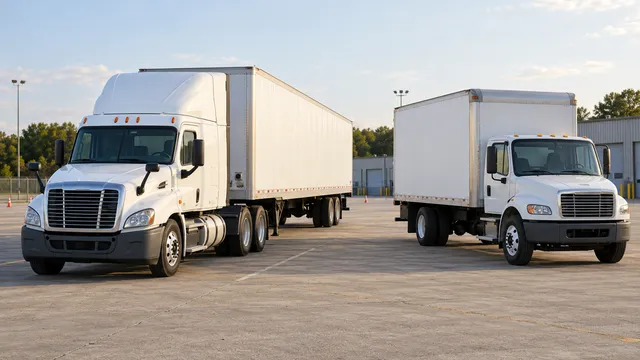
Try the free combination vehicles practice test. Study the explanations, then check your state manual.
| Your situation | Start with… |
|---|---|
| You will tow a heavy trailer | Compare the weight tests |
| You will drive a single heavy truck | Check Class B |
| You will carry people or hazmat | Check the added endorsement |
The A/B difference, without the jargon
Federal vehicle groups use weight ratings. GVWR is the gross vehicle weight rating for one vehicle. GCWR is the gross combination weight rating. Get the ratings from the vehicle’s records. Check the class with your state license office.
| Group | Core definition | A useful way to think about it |
|---|---|---|
| Class A | A combination rated at least 26,001 lb, with a towed unit rated over 10,000 lb. | A qualifying tractor-trailer combination. |
| Class B | A single vehicle rated at least 26,001 lb; it may tow a vehicle rated no more than 10,000 lb. | A qualifying heavy straight truck. |
| Class C | Outside A/B, but designed for 16 or more people including the driver, or used for specified hazardous-materials transport. | Passenger or hazardous-materials rules can trigger a CDL even for a smaller vehicle. |
Definitions: 49 CFR 383.91. FMCSA’s driver overview also explains the classifications and weight-rating/actual-weight criteria. Confirm the application to your vehicle and any exemptions with the state.
Open the page for the class you are considering
This comparison stops at the federal vehicle groups. The Class A and Class B pages add published training schedules, charges, and wage statistics. The Class C page states the federal group and the endorsement tests. It does not add a Class C tuition. BLS does not publish a Class A wage. The Class A jobs page shows the heavy and tractor-trailer figures and says they are not a Class A wage.
- Class A CDL training — combination vehicles, including a tractor-trailer when the ratings qualify.
- Class B CDL training — heavy single vehicles, and the cases where a bus is Class B instead of Class C.
- Class C CDL — a smaller vehicle designed for 16 or more people, including the driver, or used for the hazardous materials defined in 49 CFR 383.5.
See what changes between the configurations
Combination vehicle or straight truck?
Select a numbered point to see the distinction.
A box body alone does not decide the license: compare box-truck ratings, towing and cargo before selecting a course.
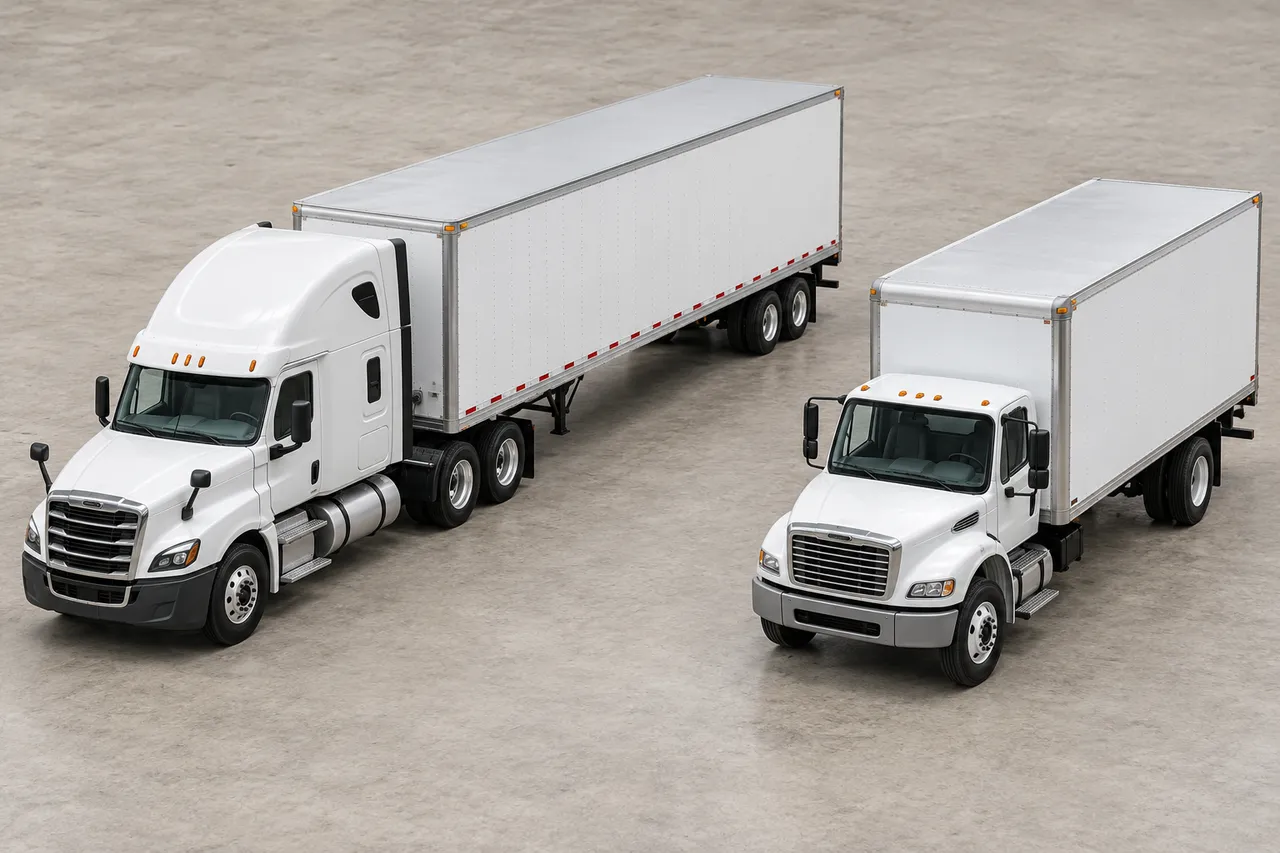
01Tractor and semitrailer
The tractor and trailer are separate units. For the Class A definition, check both the combination rating and the rating of the towed unit.
02Straight truck
The cab and cargo body sit on one chassis. A qualifying heavy single vehicle falls within Class B, subject to its towing configuration.
Concept vehicle illustration; not to scale. Appearance alone does not prove weight ratings. Definition source: 49 CFR 383.91.
Once you know the vehicle class, use the CDL endorsement picker to choose a study path for your cargo or passenger work.
A license class is not an endorsement
Class A, B or C describes a vehicle group. Endorsements let you do certain work after the required tests and checks. Passenger (P), school bus (S) and hazardous materials (H) are examples. Class B alone does not let you do every school-bus or passenger job.
More about A license class is not an endorsement
Restrictions limit what you may drive. Limits on gears and brakes differ from endorsements. Ask the school which vehicle you will train and test in, and ask the state license office what restrictions could result. Check this closely if the job needs equipment your course does not use.
Choose the job vehicle before choosing the course
- Describe the work. Will you drive a tractor-trailer, a rigid truck, a passenger vehicle or another configuration?
- Get the ratings and required endorsements. Use the employer’s actual vehicle specification, not a generic recruitment headline.
- Confirm the license and restrictions. Check the state handbook and state license office before paying.
- Match the course. Ask whether the listed location offers the exact class, practical components and test vehicle you need.
Starting with Class B and later upgrading to Class A can involve extra training and testing. Compare that route with starting in Class A, but do not assume the larger class removes endorsement or restriction requirements. See the FMCSA ELDT guidance for upgrades.
Next: the steps to get a license and how to compare training costs.
Three vehicle-rating examples to discuss with the state
These are simplified rating examples, not decisions about a given vehicle or exemption. A combination rated 30,000 lb with a towed unit rated 12,000 lb matches the rating pattern for Class A. A single vehicle rated 30,000 lb towing a unit rated 8,000 lb matches the Class B rating pattern. A smaller passenger vehicle may fall under Class C when its passenger design capacity triggers the CDL definition.
More about Three vehicle-rating examples to discuss with the state
Bring your vehicle’s actual manufacturer ratings and setup to the state license office. Do not guess from a photo, rental ad or everyday vehicle name. A trailer rated at 10,000 lb differs from one rated above that cutoff. This can matter even if both are just called a trailer.
Actual-weight criteria and exemptions can also matter under the rules that apply. The examples explain why you must check the vehicle information; they do not replace that check.
Ask about the test vehicle before paying for a course
Ask the provider to identify the transmission, brake system and coupling arrangement of the test vehicle. Ask the state license office what restrictions could result and what would be required to remove a restriction later. Price that later work separately if it could affect the jobs you want.
More about Ask about the test vehicle before paying for a course
Do the same for passenger work. A passenger endorsement tested in one vehicle group can involve a restriction on another group. A general truck-training package is not automatically a bus-training package. The endorsement and restriction guide separates these decisions.
For a Class B-to-A upgrade, check the applicable ELDT pathway and state rules for your license history. Do not assume the process is identical to getting the first license or that a prior course covers every new component.
Choose the license for a real target, not a vague promise
Collect a few actual job descriptions you could reasonably pursue. Record the vehicle, class, endorsements, equipment and experience requirements. Ask employers which requirements are needed on the first day and which training they provide later. This gives you a concrete reason to choose one training route over another.
More about Choose the license for a real target, not a vague promise
Class A offers a different vehicle group from Class B; that does not mean every Class A course is the best purchase for a person targeting a specific straight-truck or bus job. Compare cost, schedule, training scope and the actual work you want. Keep any claim about future job access separate from a licensing definition.
Once the target is clear, use the directory to find the training you need type and ask each location the same questions. The registry does not supply a complete employment or price comparison for you.
Questions drivers ask
Does Class A include Class B?
Federal rules let a driver who passed Group A knowledge and skills tests drive Group B or C vehicles. The required endorsements still apply. Restrictions and the work still matter. This does not let you drive every vehicle.
Is a box truck always Class B?
No. The body shape is not enough. Check the actual weight ratings and configuration, plus any passenger or hazardous-materials requirements.
Is Class A always better than Class B?
They cover different vehicle groups. Choose by the vehicle, work and driving rights you need. Check the cost and scope of training too.
Can I identify the needed class from a truck photo?
No. Check the actual ratings, setup, passengers or cargo, and rules that apply. Looks alone are not enough.
Does Class B include school-bus privileges?
Not automatically. Passenger and school-bus requirements, restrictions and any additional state certificates must be checked separately.
Can I upgrade from Class B to Class A?
You can upgrade, but the training and state steps depend on your current license and history. Check if ELDT applies and what the state requires before buying training.
Why does the test vehicle matter?
Its transmission, brake system and configuration can affect the restrictions on the resulting license. Confirm the consequences before you choose that vehicle.
Sources and scope
Source links, check date and scope
Sources checked Oct 26, 2026. Federal baselines and named state examples are distinguished in the article. Your licensing agency and written program terms govern your case.
Prepared by CDLP editorial from the sources above. No independent instructor, legal or financial review is claimed.
Get matched with CDL schools near you
Get your state CDL checklist + carrier-paid options
- Free state checklist
- Carrier-paid options
- Email when matching opens in your state
Keep planning your next step.
All resources
Class A CDL training
What a Class A CDL covers, the federal steps, and published training time, cost and pay figures.
Read guideClass B CDL training
What a Class B CDL covers, how it differs from a bus or straight truck in general, and published time, cost and pay figures.
Read guide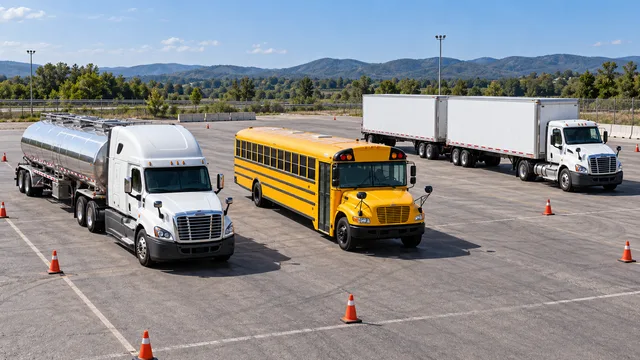
CDL endorsements: H, N, P, S, T and X
Compare H, N, P, S, T and X endorsements, understand common equipment restrictions and plan the right questions before paying for training.
Read guide