License classes
Class C CDL
What is a Class C CDL?
Class C is the federal small-vehicle group. It is a vehicle that is not Group A or Group B and is either designed for 16 or more passengers, including the driver, or used to transport hazardous materials as defined in 49 CFR 383.5. A heavier vehicle stays Class A or Class B. Passenger work needs the P endorsement and a skills test. A first hazardous-materials endorsement is a separate knowledge test. FMCSA does not publish a Class C tuition in the sections checked October 29, 2026.
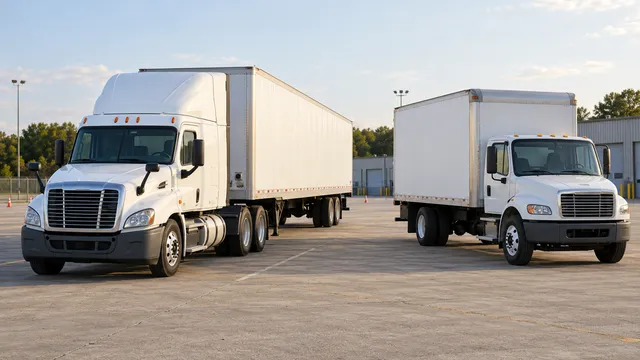
What Class C is
49 CFR 383.91 calls Group C the small vehicle. It is any single vehicle, or combination, that meets neither Group A nor Group B, and that either is designed to transport 16 or more passengers including the driver, or is used to transport hazardous materials as defined in 49 CFR 383.5. 49 CFR 383.5 uses the same two triggers and describes the group as a vehicle that does not meet Group A or Group B.
Checked October 29, 2026: 49 CFR 383.91 and 49 CFR 383.5.
A smaller truck that carries neither 16 or more people nor those hazardous materials is not made Class C by the body style. A vehicle that does meet Group A or Group B stays in that group. A bus at or above the Group B weight rating is not pushed down to Class C. Compare the thresholds in Class A and Class B before you assume a bus or a placarded truck is Class C.
49 CFR 383.91(c) says a driver who passed the Group A knowledge and skills tests may operate a Group C vehicle with the required endorsements. A driver who passed the Group B tests may do the same. The class does not add the endorsement. The class comparison keeps the letters separate.
Passengers and school buses
The passenger count in the Class C definition includes the driver. Sixteen passengers means 16 people in total, not 16 besides the driver. 49 CFR 383.93 requires a knowledge test and a skills test for the passenger endorsement. The skills test uses a representative vehicle for the group. 49 CFR 383.95(e) and (f) then limit the result: a passenger skills test in a Group B vehicle restricts the driver from a Group A passenger vehicle, and a passenger skills test in a Group C vehicle restricts the driver from a Group A or Group B passenger vehicle.
49 CFR 383.153 prints that second limit as restriction N, “No Class A and B passenger vehicle.” The same section uses endorsement N for a tank vehicle. Read which line of the license the letter is on. The endorsement guide separates codes from restrictions.
School bus is narrower than “any bus.” 49 CFR 383.5 defines a school bus as a commercial motor vehicle used to transport pre-primary, primary, or secondary school students from home to school, from school to home, or to and from school-sponsored events. It says school bus does not include operations of a for-hire motor carrier. 49 CFR 383.123 says an applicant for the school bus endorsement must pass the passenger knowledge and skills tests, pass the school bus knowledge test, and take the skills test in a school bus of the same vehicle group the applicant will drive.
A commercial learner’s permit can carry P and S. 49 CFR 383.25 prohibits a P-endorsed permit holder from carrying passengers other than federal or state auditors and inspectors, test examiners, other trainees, and the CDL holder who is supervising. For a passenger vehicle, that CDL holder must be directly behind the driver or in the first row behind the driver, watching and supervising. An S-endorsed permit has the same passenger limit on a school bus.
Get your CDL paid for
Get notified when carrier-paid CDL matching opens in your state, plus tips on payback contracts and getting hired with no experience.
Hazardous materials on a Class C vehicle
The second Class C trigger is use in transporting hazardous materials as defined in 49 CFR 383.5: material that must be placarded under subpart F of 49 CFR part 172, or any quantity of a material listed as a select agent or toxin in 42 CFR part 73. That trigger applies only when the vehicle meets neither Group A nor Group B. A placard does not convert a Group A combination into Class C.
49 CFR 383.93 requires a knowledge test for the hazardous-materials endorsement, not a skills test. 49 CFR 383.25(a)(5)(iv) prohibits every federal endorsement other than P, S, and N on a commercial learner’s permit, and paragraph (a)(6) says the permit holder does not operate a commercial motor vehicle transporting those hazardous materials. You cannot use the permit to haul that cargo while you wait for the endorsement.
A first hazardous-materials endorsement requires training from a provider on the Training Provider Registry under 49 CFR 380.609. The state knowledge test is passed at 80 percent under 49 CFR 383.135. The TSA threat assessment is a separate step. This page does not restate the TSA fee. Use the state licensing agency and TSA for the current charge.
Permit, age, and training
49 CFR 383.25 says the permit holder must be 18 or older, must pass the general knowledge test, and is not eligible for the skills test in the first 14 days after the permit is first issued. The permit is a precondition to the initial CDL and to an upgrade that needs a skills test. On a passenger vehicle the supervising CDL holder sits behind the driver, as the permit section states.
49 CFR 391.11(b)(1) says a person qualified under that section is at least 21 years old, except as subpart G of that part provides. That is a carrier qualification rule. It is not a statement that every state issues every Class C license at 21, or at 18. The state sets the age for the license you are applying for. Published state notes, where an official page was opened, are on how to get a CDL in your state. 49 CFR 391.11(b)(2) also requires enough English to converse with the public, understand traffic signs and signals, respond to official inquiries, and make entries on reports and records.
49 CFR 380.609 requires registry training for a first Class A or Class B CDL, for an upgrade to Class A or B, and for a first passenger, school bus, or hazardous-materials endorsement. It does not name Class C as its own training path. A first P, S, or H on a Class C application still falls under the endorsement sentence. There is no federal hour count or tuition in the sections checked for this page. No school price was opened for Class C.
There is no Class C wage in these rules
The sections above do not publish a wage, a tuition, or a state fee. BLS occupational medians for bus drivers are not a Class C wage, because a bus is not automatically Class C. Ask the employer for the written pay and the licensing agency for the test fee. Browse listed schools and confirm that the location trains on the vehicle group and endorsement you need. A directory row is not a Class C course.
Check the passenger count and the weight ratings.
Sixteen people including the driver, or a hazardous-materials load, can make a smaller vehicle Class C. A heavier vehicle stays Class A or Class B.
Browse CDL schoolsQuestions drivers ask
Is every bus a Class C vehicle?
No. Class C is a vehicle that meets neither Group A nor Group B and is designed to transport 16 or more passengers, including the driver, or is used to transport hazardous materials as defined in 49 CFR 383.5. A heavier bus can be Group B. Read the ratings.
Does a hazmat load make the truck Class C?
Only when the vehicle meets neither Group A nor Group B. A combination or heavy straight vehicle that meets Group A or Group B stays in that group. The hazardous-materials endorsement is separate from the class.
Does Class C include a skills test?
49 CFR 383.91 says an applicant must be tested on knowledge and skills for the vehicle group. Passenger and school-bus endorsements add their own skills tests. The hazardous-materials endorsement is a knowledge test, not a skills test.
Can I carry passengers with a learner’s permit?
No, except the people named in 49 CFR 383.25. A permit with a P endorsement cannot carry passengers other than auditors, inspectors, test examiners, other trainees, and the CDL holder supervising the trip. On a passenger vehicle, that CDL holder sits directly behind the driver or in the first row behind the driver.
What does restriction N mean on a passenger license?
It is not the tank endorsement. 49 CFR 383.153 uses restriction N for no Class A and B passenger vehicle. 49 CFR 383.95(f) requires that restriction when the passenger skills test is taken in a Group C vehicle. Endorsement N, on a different line of the same section, means tank vehicle.
Sources and scope
Sources checked Oct 29, 2026. Federal baselines and named state examples are distinguished in the article. Your licensing agency and written program terms govern your case.
- 49 CFR 383.91: vehicle groups, including Group C
- 49 CFR 383.5: passenger count and hazardous materials
- 49 CFR 383.93: endorsement tests
- 49 CFR 383.95: passenger-vehicle restrictions
- 49 CFR 383.123: school bus endorsement
- 49 CFR 383.153: restriction N and endorsement N
- 49 CFR 383.25: commercial learner’s permit
- 49 CFR 383.135: 80 percent knowledge-test score
- 49 CFR 380.609: first P, S, and H training
- 49 CFR 391.11: driver qualifications, including age
Prepared by CDLP editorial from the sources above. No independent instructor, legal or financial review is claimed.
Get your CDL paid for
Get notified when carrier-paid CDL matching opens in your state, plus tips on payback contracts and getting hired with no experience.
Keep planning your next step.
All resourcesClass A vs Class B CDL: which license do you need?
A vehicle-based comparison, with endorsements and restrictions explained separately.
Read guide
Class A CDL training
What a Class A CDL covers, the federal steps, and published training time, cost and pay figures.
Read guideClass B CDL training
What a Class B CDL covers, how it differs from a bus or straight truck in general, and published time, cost and pay figures.
Read guide