Find CDL training
Where do you want to train?
Which CDL schools match my location and license class?
Search by ZIP code, city or state and choose Class A or Class B. A ZIP search matches its state; it does not rank schools by distance. Compare listed training types and locations, then ask each school about current public enrollment, schedules and itemized fees.
From classroom to practice range.
Theory, backing practice and vehicle training happen in different parts of a CDL campus.
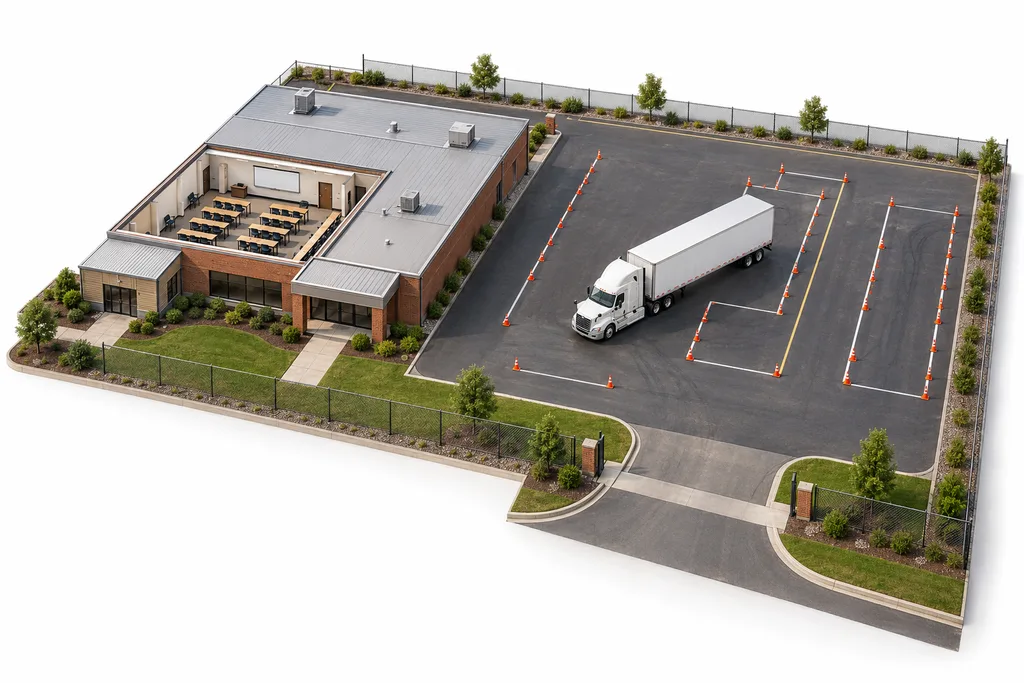
01Classroom and theory
Theory covers vehicle controls, inspections, safe driving, vehicle systems and hours of service. Federal ELDT sets no minimum theory hours; all curriculum topics must be covered and the overall assessment score must reach 80%.
02Closed practice range
Class A range training includes straight-line backing, offset backing, alley-dock backing, parallel parking and coupling. The instructor documents practice hours and proficiency before range completion.
03Training vehicle
Class A training uses a combination vehicle, such as a tractor and semi-trailer. Class B generally covers a single heavy vehicle. The test vehicle must match the license class sought.
04School office
Enrollment staff handle program schedules, fee information and application paperwork. Review the written program terms and total charges here before enrolling.
Sources: FMCSA Class A curriculum, pages 2–3 (March 2021) and California DMV vehicle classes.
What a pre-trip inspection covers.
Four inspection zones on a tractor-trailer: engine, lighting, wheels and coupling.
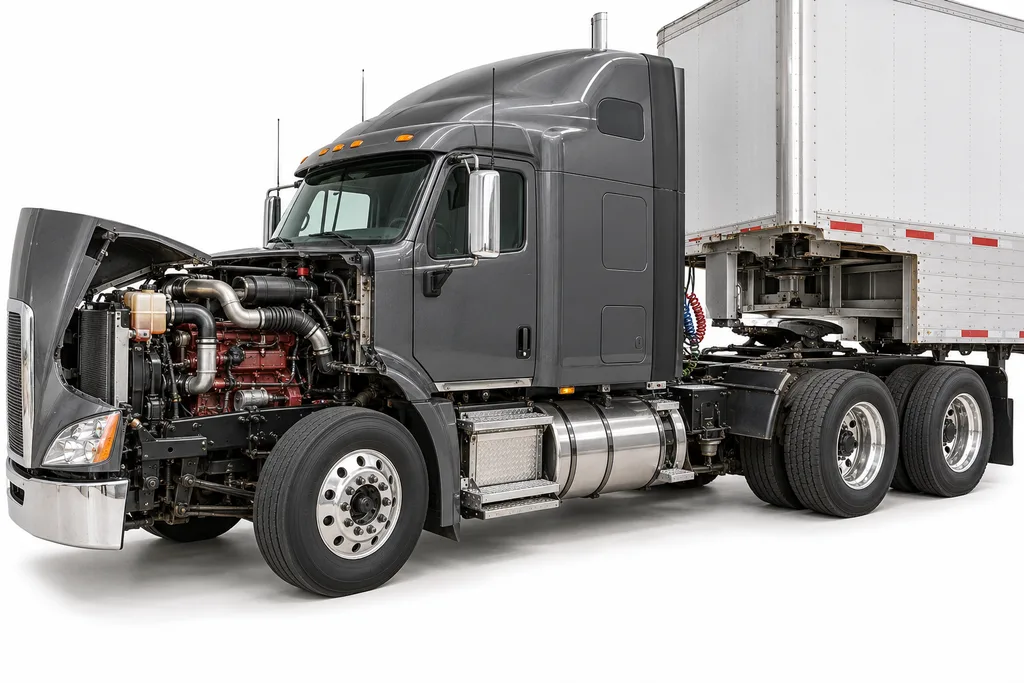
01Engine area
Inspection covers fluid levels and leaks, plus the condition of belts and hoses. Engine oil, coolant and power-steering fluid are among the checks; belt wear and damaged hoses can reveal developing faults.
02Lights and visibility
Check that exterior lamps work and lenses are intact. Reflectors and reflective tape must be present and unobscured. Lighting checks include headlights, turn signals and brake lights.
03Tires and wheels
Inspect tread depth, inflation and tire damage, then rims and lug nuts for damage or looseness. These checks identify worn tires and insecure wheel components before driving.
04Coupling area
Inspect the fifth wheel, locking mechanism, kingpin and trailer apron, together with air and electrical lines and connectors. Look for damaged components, insecure connections and insufficient line clearance.
Sources: California DMV Class A inspection checklist and Commercial Driver Handbook, sections 2 and 11.