Permits & training
ELDT training: requirements, online theory and records
Do I need ELDT before my CDL test?
Entry-Level Driver Training (ELDT) is a federal training baseline for specified first-time CDL and endorsement applications. An online theory course alone does not complete a first Class A or B driver’s practical training. Check the required training type, registered provider and reported completion record before the applicable test.

Who needs ELDT, and when does it matter?
FMCSA identifies first-time Class A and Class B applicants, B-to-A upgrades, and first-time P, S and H endorsement applicants as covered groups, subject to the rule’s exceptions. Previously held credentials and the February 7, 2022 implementation date can matter. Use the official applicability tool for your history instead of treating every renewal or upgrade as the same case.
The training you need also depends on the credential. A hazardous-materials knowledge-test requirement is not the same course as a first Class A practical-training pathway. Write down your current license, what you are adding and the test you intend to take. Send that description to the provider and confirm the training scope with your licensing agency before paying.
FMCSA applicability guidance and ELDT overview describe the covered applications and exceptions.
Can you complete ELDT online?
Theory may use online learning, but behind-the-wheel training requires actual vehicle operation. A course labeled “ELDT online” may therefore be a valid theory component without being a complete path to your first CDL. Read the course scope before comparing prices.
| Component | What to verify | What it does not replace |
|---|---|---|
| Theory | Applicable curriculum, assessment, provider identity and reporting. | Required practical instruction or the state skills test. |
| Range instruction | Relevant vehicle class, individual practice and proficiency assessment. | Public-road instruction where required. |
| Public-road instruction | Actual supervised operation and assessment of the required skills. | The permit, state application or licensing decision. |
Confirm the practical provider before buying theory separately. FMCSA warns that some providers do not accept theory-only graduates into a standalone practical course. A cheap theory purchase is poor value if you later have to buy a bundled course to obtain the practical training you need.
Three settings. Different training goals.
Concept training campus, not a named school. Select an area to see what to ask before enrolling.
01Classroom or online theory
Theory builds the knowledge you need to explain decisions. Ask which curriculum the course covers, how assessments work and who reports completion.
02Closed-range practice
Range instruction develops vehicle-control skills. Ask about individual time at the controls and how proficiency is assessed, rather than relying on total class hours.
03Public-road instruction
Road instruction puts skills into traffic situations under qualified supervision. Confirm it is included in the practical course you are buying.
How many hours does ELDT take?
The federal baseline does not set one minimum hour count for theory or behind-the-wheel instruction. It requires the applicable curriculum and demonstrated proficiency; the theory assessment has an overall minimum score of 80 percent. State requirements can add to that baseline. The absence of one federal hour minimum does not mean a brief course is enough for every learner.
Ask the school to distinguish total program hours from your individual time operating the vehicle. Classroom time, observation and shared range sessions are not interchangeable measures of driving practice. Get a breakdown showing the schedule, how many learners share a truck and what happens if you need additional instruction.
Compare the process for reaching proficiency rather than shopping for the shortest certificate. Ask who evaluates you, what feedback you receive and whether extra practice or a repeat assessment costs more. These questions help you compare courses even when both advertise the same total hours.
How do you check that ELDT completion was reported?
Use the Training Provider Registry’s driver record-check process after completing the relevant training. Providers must report completion by midnight of the second business day after completion. A provider’s own certificate or a purchase receipt does not by itself show that the state can find the required registry record.
- Check which provider reports each component, especially when theory and practical training are separate.
- Use the official TPR driver record check and compare your license details and training type.
- If a record is missing or incorrect, ask the reporting provider to investigate the specific discrepancy.
- Confirm test eligibility with the state before committing to a test-vehicle or appointment charge.
Do not post your license number or identity documents in a public review to resolve a reporting problem. Use the provider’s verified channel and the official registry process. Keep a dated note of whom you contacted and what remains outstanding.
Do ELDT results expire?
FMCSA states that ELDT certification information in the registry remains valid indefinitely under its regulations. That does not keep a learner’s permit, medical certification or state test eligibility valid indefinitely. Check those records separately if your training and test are far apart.
For a delayed application, ask the licensing agency which records remain usable and which steps must be renewed or repeated. If you change the class or endorsement you want, check whether your existing training covers the new application. A valid record for one component is not proof that every component for a different application is complete.
Keep this distinction in your budget: a repeated state application charge and additional practical instruction are different from repurchasing theory. Get the reason for any proposed repeat training in writing before paying.
Your next-step checklist
Use this as a planning checklist. Selections stay on this page and are not submitted.
Questions drivers ask
Does an online ELDT certificate give me a CDL?
No. It may document a theory component. Your applicable practical training, permit, state tests and license issuance are separate requirements.
Is there a federal 160-hour ELDT requirement?
The federal ELDT baseline does not prescribe one minimum hour count. A state, provider, employer or funding program may have its own requirements, which you should verify separately.
Can theory and practical training come from different providers?
They can be separate, but confirm the applicable registry requirements and practical provider’s acceptance policy before buying theory on its own.
When should I check my training record?
After the provider’s reporting deadline and before relying on the record for an applicable test. Missing or incorrect records should be addressed with the reporting provider.
Does an old ELDT record keep my CLP valid?
No. FMCSA’s statement about ELDT record validity is separate from permit expiry and other state licensing requirements.
Put the answers to work.
Use the same questions when comparing your training options.
Find training locationsSources and scope
Sources checked Oct 26, 2026. Federal baselines and named state examples are distinguished in the article. Your licensing agency and written program terms govern your case.
- FMCSA: ELDT applicability
- FMCSA: training overview and assessment
- FMCSA: selecting a provider
- FMCSA: registry and reporting deadline
- FMCSA: validity of training records
Prepared by CDLP editorial from the sources above. No independent instructor, legal or financial review is claimed.
Keep planning your next step.
All resources
What does CDL training really cost?
Published program charges, extra fees and a worksheet for comparing written quotes.
Read guide
CDL permit: requirements, tests and a study plan
Understand what a CLP allows, which tests to prepare for, what to bring and how to turn practice mistakes into a useful study plan.
Read guide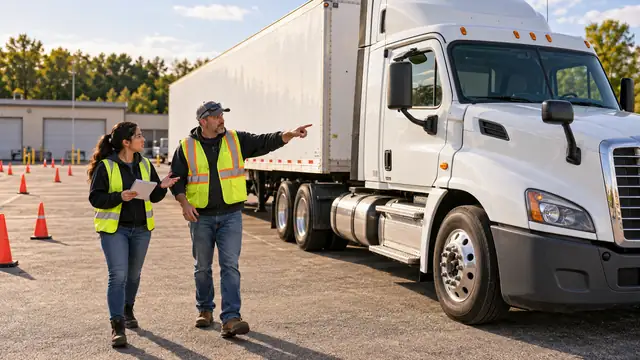
How to choose a CDL school: compare training and costs
Check the provider, individual driving practice, test vehicle, total price, schedule and contract before choosing a CDL training program.
Read guide