Free CDL study tools
Free CDL Tanker Practice Test
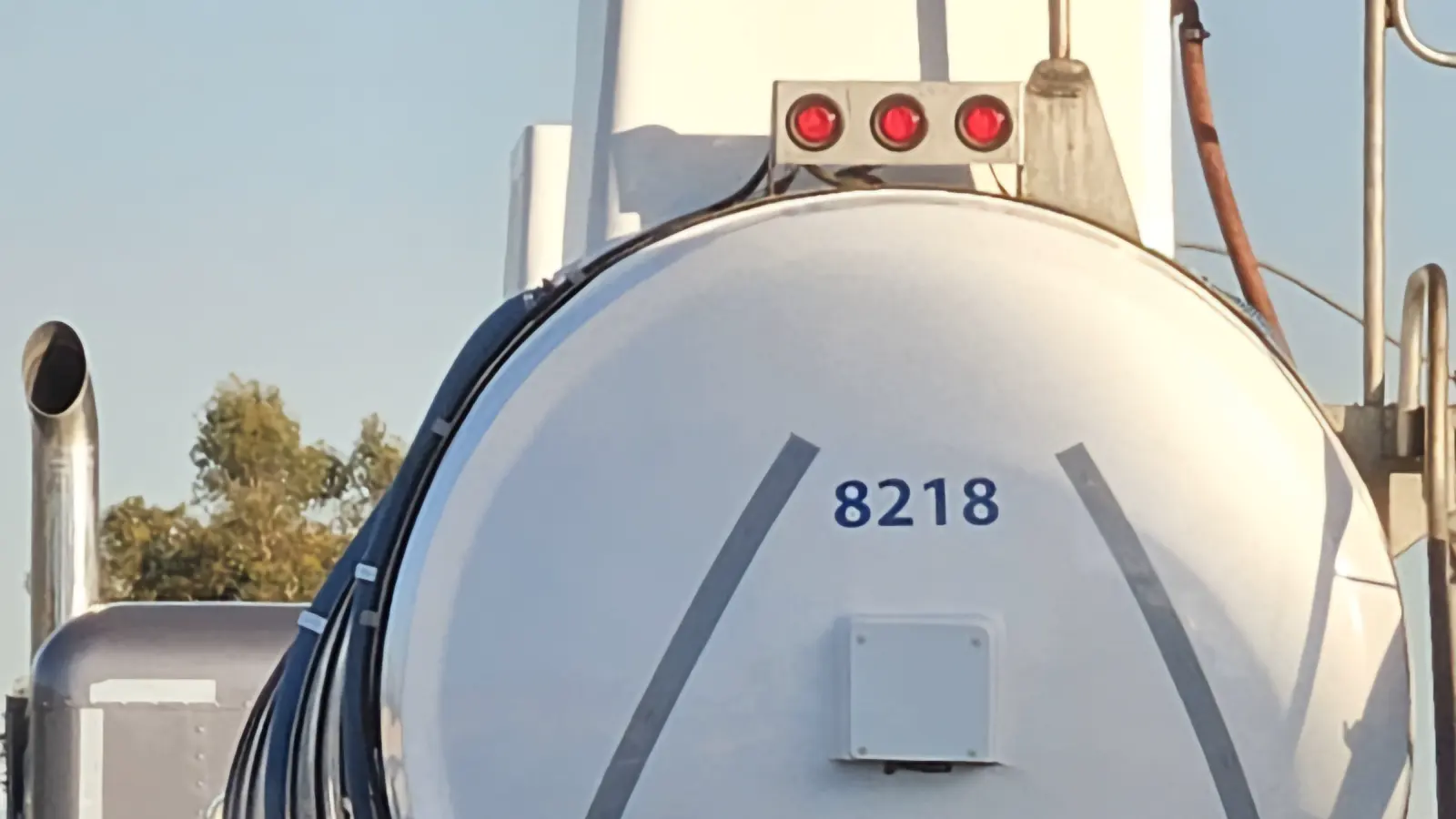
Photo by Epolk · CC BY-SA 4.0. Cropped and resized for this page

What should I study for the CDL tanker endorsement test?
Study the tank-vehicle definition, endorsement limits, liquid-load effects, tank construction and the handling differences between empty, full and partial loads. If the cargo is hazardous, additional hazmat requirements apply. Use the practice questions to review federal topics and FMCSA rollover guidance, then learn the actual vehicle and loading procedure with qualified training.
Topics in this set
Tank endorsement scope, learner restrictions, baffles and bulkheads, load effects, rollover prevention and hazmat handling.
25 questions · Practice mode
Last source review: . Source editions and limits are described below.
Practice tanker
Your result
The knowledge-test pass mark is 80% under 49 CFR 383.135. This independent practice score does not predict an official result.
Your progress and missed-question deck stay in this browser. No account or email is needed.
10 sample questions and answers
Read these examples here, or practice the full set above. The wording is independent study material based on federal sources.
For the CDL tank-vehicle definition, what individual and aggregate rated-capacity thresholds apply?
Answer: Individual tanks over 119 gallons and aggregate capacity at least 1,000 gallons
The definition also addresses tank attachment and the vehicle’s design for liquids or gases.
Report a problem with this questionCan temporarily attached qualifying liquid tanks fall within the CDL tank-vehicle definition?
Answer: Yes
The definition includes permanent and temporary attachment.
Report a problem with this questionA flatbed carries an empty storage tank not designed for transportation, temporarily attached and rated over 1,000 gallons. Is that the specific excluded case?
Answer: Yes
The exclusion has specific conditions; it is not a blanket exemption for every empty transport tank.
Report a problem with this questionA CLP holder has N. May the learner operate a loaded tank vehicle?
Answer: No, the CLP tank privilege is limited to empty vehicles
A tank that previously contained hazmat must also be purged of residue for the CLP exception.
Report a problem with this questionAn empty transport tank still contains hazmat residue. May a CLP holder with N operate it?
Answer: No, the tank must have been purged of that residue
The learner restriction explicitly addresses previously carried hazardous materials.
Report a problem with this questionWhich specialized test is required for the tank-vehicle endorsement?
Answer: A knowledge test
Other licensing conditions and the vehicle group still apply.
Report a problem with this questionDoes a tank endorsement automatically satisfy a separate hazardous-materials endorsement requirement?
Answer: No
Tank operation and transport of CDL-defined hazardous materials are separate endorsement categories.
Report a problem with this questionShould tank-vehicle study cover handling when empty, full and partially full?
Answer: Yes
The knowledge requirements include braking, load effects, grades and curves under different fill conditions.
Report a problem with this questionIs a baffle defined as a liquid-tight partition?
Answer: No, it is a non-liquid-tight device regulating fluid motion
This federal cargo-tank definition distinguishes a baffle from a bulkhead.
Report a problem with this questionWhich term describes a liquid-tight transverse closure at a tank’s end or between tanks?
Answer: Bulkhead
The definition concerns tank construction; do not infer a particular internal layout without inspecting its specification.
Report a problem with this question
Sources and study scope
The bank uses original questions based on federal rules and FMCSA material. The questions use the 2025 annual CFR edition, with selected current eCFR references checked on October 28, 2026. It is not a complete review of every later amendment. Each explanation links to its federal source. State manuals are further-study links; no AAMVA manual text is reproduced.
The 80% knowledge-test pass standard comes from 49 CFR 383.135. This site’s practice pool and session lengths do not determine your state’s official test format.